Published on
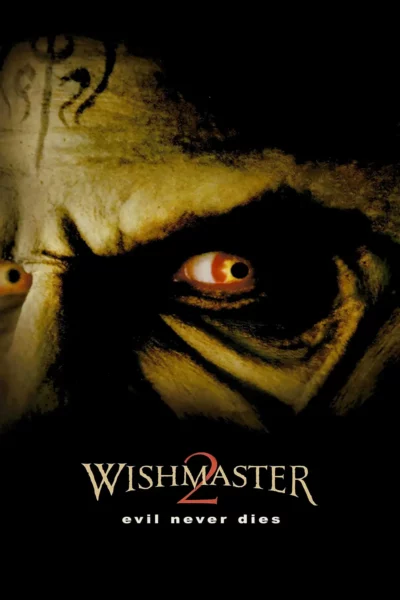
When it comes to sequels, the law of diminishing returns often applies, especially in horror. But every now and then, a franchise manages to deliver a later installment that not only outshines its predecessors but occasionally even surpasses the original. A Nightmare on Elm Street 3, Bride of Chucky, Friday the 13th Part VI, and Halloween H20 are just a few examples of sequels that proved there was still life in their respective franchises. But where does Wishmaster 2: Evil Never Dies fit into the equation? Is it a case of diminishing returns, or is this one of those rare sequels that manages to match or even surpass the original?
During a botched museum robbery, Morgana Truscott accidentally frees an ancient Djinn (Andrew Divoff) imprisoned inside a fire opal. After killing her partner, the Djinn assumes the identity of Nathaniel Demerest and deliberately surrenders to the police, using his time in prison to grant inmates’ wishes in exchange for their souls. Meanwhile, Morgana is haunted by visions of the Djinn’s gruesome deeds and turns to Gregory, a priest and former lover, for help. As they investigate the ancient prophecy behind the Djinn’s return, they discover that he must collect 1,001 souls before the person who freed him can make three wishes, unleashing his kind upon the world. With the Djinn’s plan nearing completion, Morgana and Gregory must find a way to stop him before he can fulfil the prophecy and unleash hell on Earth.
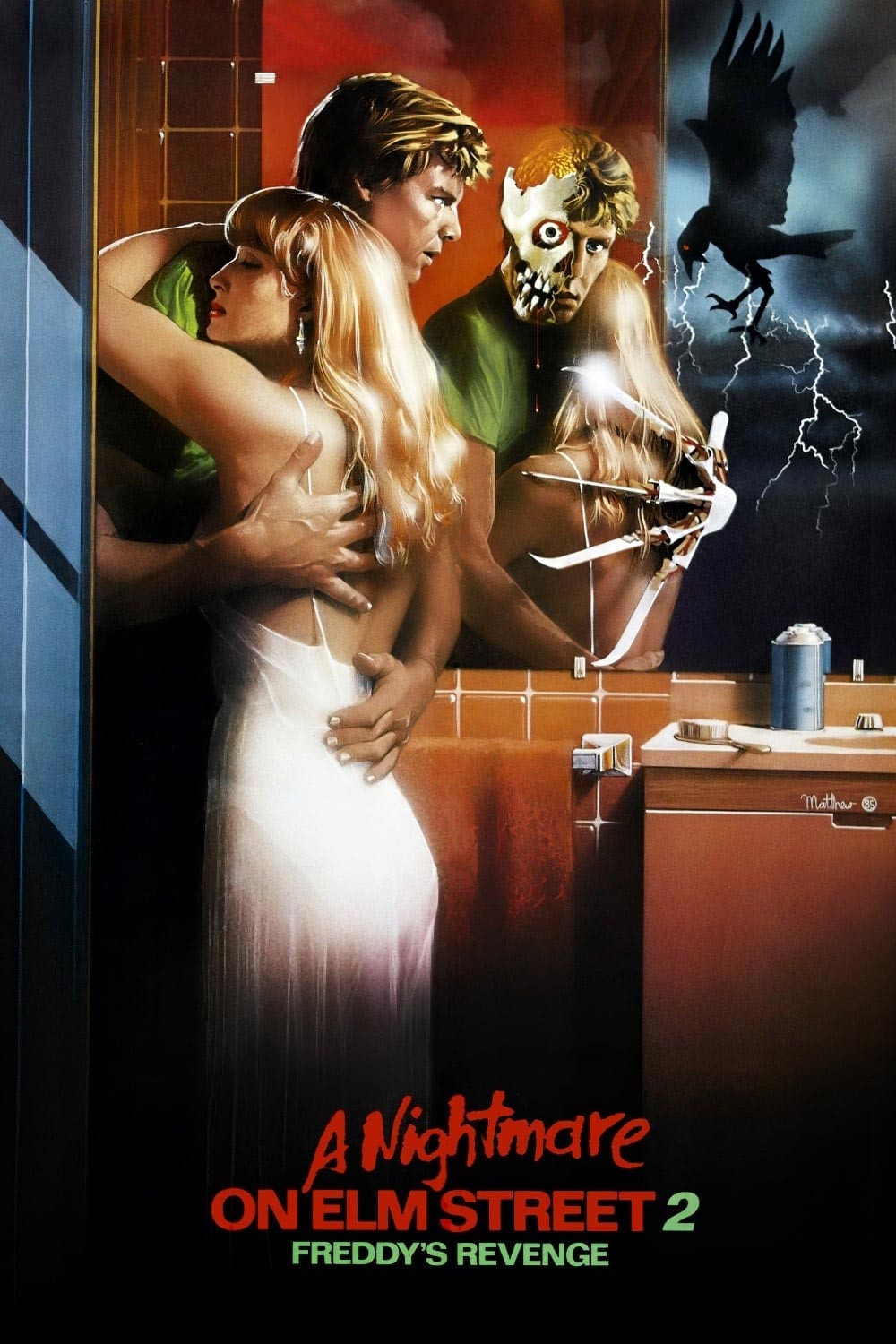
Director Jack Sholder also helmed A Nightmare on Elm Street 2: Freddy’s Revenge, a movie that practically ignored everything established in the original and became the black sheep of the franchise in the process. With Wishmaster 2: Evil Never Dies, he does the exact opposite: he essentially remakes the first movie. Once again, a young woman accidentally frees the Djinn from his stone prison, and once again, she experiences visions whenever he grants someone a wish. These visions send her on an investigation to uncover what is happening and, ultimately, what role she plays in the Djinn’s plans. Naturally, it all leads to a showdown in which she attempts to defeat him through some cleverly worded wishes.
The only significant new element is the Djinn’s quest to collect 1,001 souls. He must grant 1,000 wishes before he can fulfil the prophecy and unleash his fellow Djinn upon the world. It’s a convenient plot device that keeps him busy for the first two acts. Without it, the movie would probably be over in fifteen minutes, leaving little time for the obligatory parade of gruesome deaths and wish-gone-wrong shenanigans.
The original Wishmaster had quite a few notable names attached to it, most prominently the “Wes Craven Presents” banner before the title. The movie also doubled as a horror who’s who, with appearances by genre veterans Robert Englund, Kane Hodder, and Tony Todd. Wishmaster 2 doesn’t have the same star power, with a cast largely made up of unfamiliar faces. The one notable exception is Tom Lister Jr., one of those familiar character actors who seems to have made a career out of playing a certain type of tough guy.
The rest of the cast has all the charm of a daytime soap opera, both in the looks department and in the acting. Paul Johansson, playing the priest Gregory, is particularly distracting, looking like a budget-store version of Kevin Sorbo. The performances are generally pretty terrible, and some of the line deliveries are downright awkward. The Russian gang members are the worst offenders, with Oleg Vidov’s Osip taking the prize for the most painfully wooden performance of the bunch.
The only actor who seems to put any real effort into his performance is Andrew Divoff, who returns as the titular Wishmaster in both his human and Djinn forms. It’s a shame that the two movies featuring Divoff never managed to give their antagonist the same cultural staying power as Freddy, Jason, Ghostface, Chucky, or Michael Myers. Divoff certainly has the screen presence to stand alongside those horror icons, even if the movies themselves never quite got there.
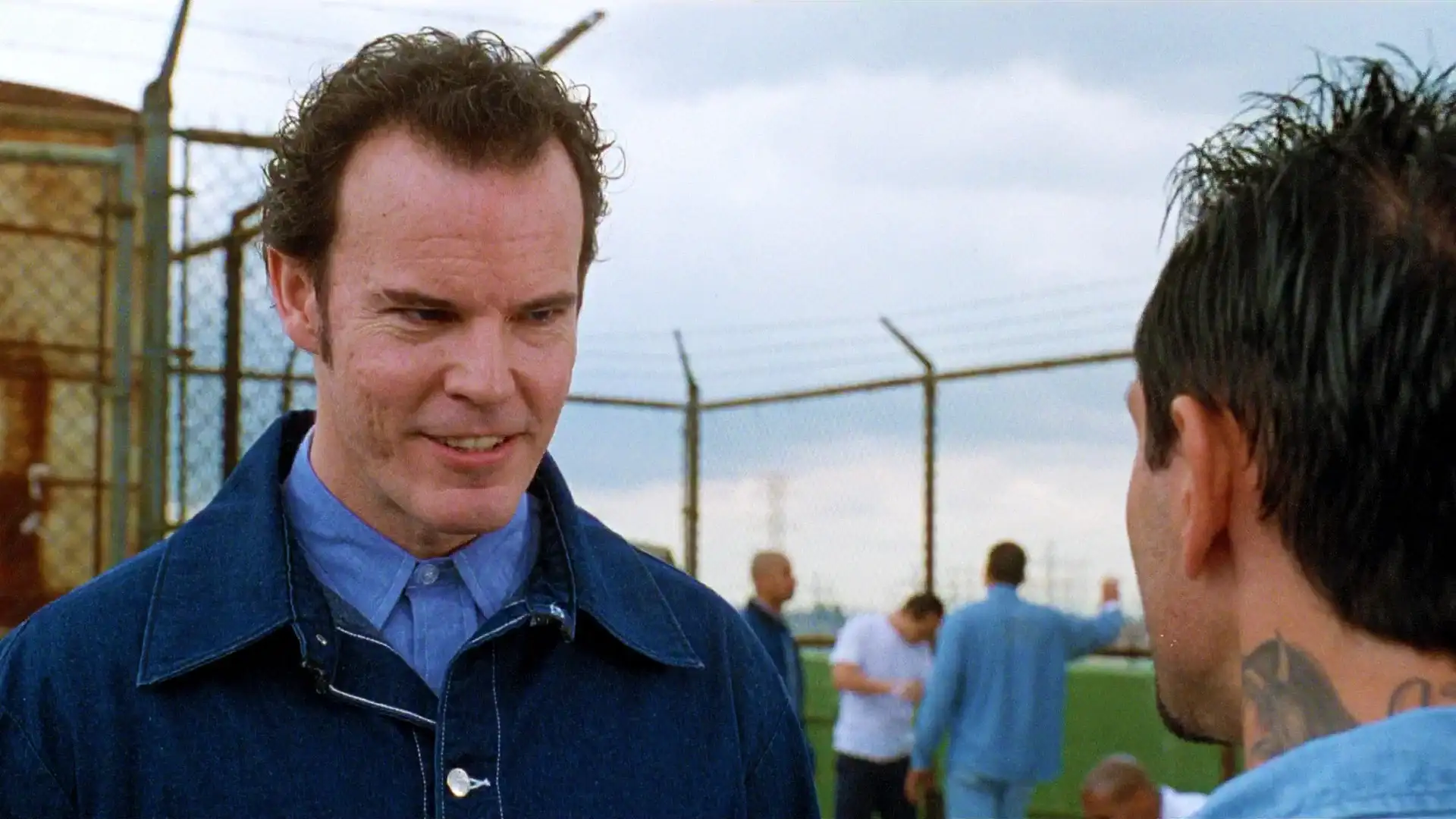
Interestingly, Divoff seems more expressive beneath the Djinn’s heavy layer of latex than he does in his human form. As Nathaniel Demerest, he spends most of his screen time sporting a permanent grin and snarling his way through practically every line of dialogue. It’s certainly a choice, and one that initially gives the character an unsettling quality. Unfortunately, the novelty wears off rather quickly, and what starts as menacing soon becomes downright irritating.
The finale should have been the movie’s highlight, with the Djinn granting wishes in a casino and collecting the souls of his victims. There are some fantastic practical effects on display, but they’re constantly undermined by some truly awful CGI. The animations of souls being ripped from human bodies look like absolute garbage, as does the sequence in which the captured souls escape from the Djinn. Then there’s a scene featuring a swarm of locusts, which amounts to little more than a bunch of black dots frantically zipping across the screen. These effects are so distractingly bad that they completely pull you out of the movie.
When even a low-budget production like Hellraiser manages to deliver more convincing effects, you know something has gone horribly wrong. For a finale that should have been a showcase for the Djinn’s supernatural powers, it’s an embarrassing technical failure.
Wishmaster 2: Evil Never Dies feels like it was made on a shoestring budget, with the look and feel of a production intended for a straight-to-TV release. It’s a disappointing sequel, saved largely by the inspired idea of putting the Wishmaster behind bars. The movie gets plenty of mileage out of this concept during its first act, with the Djinn wreaking havoc inside the prison and delivering some of the film’s best wish fulfillments. The scene in which a lawyer quite literally screws himself is an absolute highlight.
Beyond that, however, this is a fairly ho-hum sequel. It’s watchable enough, but hardly memorable, and that’s a shame because the Wishmaster franchise has all the ingredients for something special. A villain who twists people’s wishes into gruesome nightmares is a concept practically bursting with possibilities. Unfortunately, the limited budget keeps the filmmakers from getting particularly creative with those wish fulfillments, leaving the franchise’s biggest selling point feeling rather underwhelming. The Djinn may be capable of granting almost any wish, but apparently, a decent budget was too much to ask for.