Published on
Between 1997’s Batman & Robin and 2003’s Terminator 3: Rise of the Machines, Arnie’s career hit a noticeable slump. The three films he released during that stretch either underperformed or outright flopped at the box office. The 6th Day falls squarely into that category—a movie that came and went with little impact, and one that few people remember today because it never quite leaves a lasting impression.
The 6th Day follows Adam Gibson, a family man and helicopter pilot who returns home one day to discover that he’s been illegally cloned and replaced—despite strict laws banning human cloning. Forced into hiding, Adam teams up with his own duplicate to uncover the conspiracy behind the technology, leading him to a powerful corporation run by a ruthless CEO and his enforcers. As he fights to reclaim his identity and protect his family, Adam finds himself hunted at every turn, uncovering a world where cloning has gone far beyond what society was meant to allow.
The 6th Day clearly tries to channel Total Recall, leaning on a similar “who’s the real one?” premise with Adam and his clone—though it only really commits to that idea in the third act. For most of its runtime, the film plays out like a two-hour chase, with Adam constantly outsmarting the bad guys, which further invites comparisons. The difference is that Total Recall had the sharp, subversive direction of Paul Verhoeven working from a story by Philip K. Dick, while The 6th Day settles for a far more generic late-’90s action approach.
The film also brushes up against the controversial subject of human cloning, but barely engages with it. Instead of exploring the ethical or existential implications, it reduces the concept to a simple plot device. Its only real stance seems to be “the bad guys support cloning,” which isn’t much of a stance at all, especially since they’re only villains because cloning is already illegal in the film’s world. Any deeper questions about identity or humanity are left untouched, making the whole premise feel like little more than an excuse to put two Schwarzeneggers on screen.
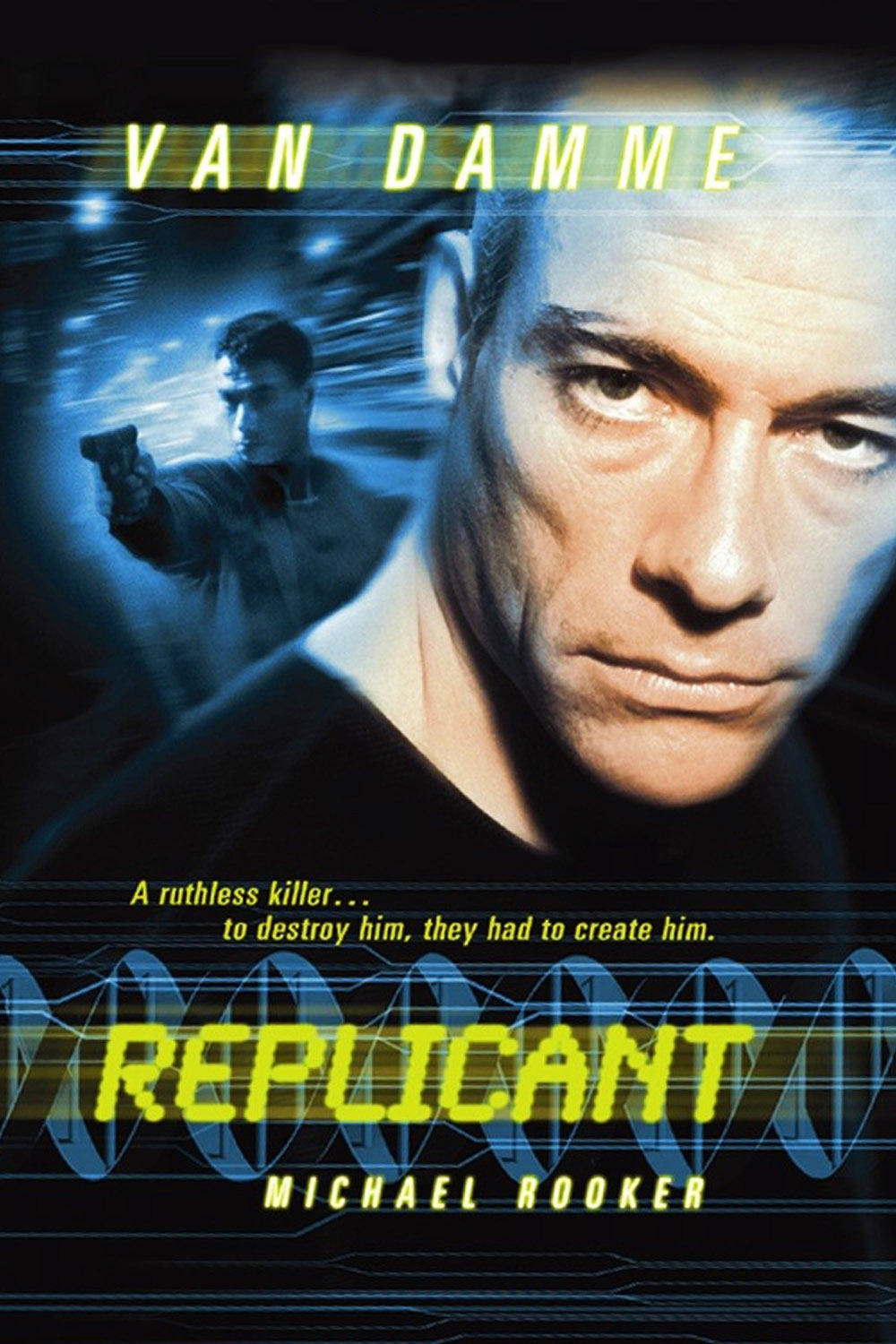
And even that hook wasn’t particularly fresh. Jean-Claude Van Damme had already played dual roles in Double Impact and Maximum Risk during the ’90s, and would do it again the following year in The Replicant, with Michael Rooker again in pursuit of a clone for much of the film. In that context, The 6th Day doesn’t just feel uninspired—it feels late to its own idea.
Looking at the film in hindsight, it’s not hard to see why The 6th Day failed. It’s a generic Arnold Schwarzenegger action vehicle that never once feels like a “must-see” event. Nothing about it screams fun or urgency. Even the marketing didn’t help—just look at the poster. That strange contraption in front of his face is more confusing than intriguing, and it does little to spark curiosity. It’s a weak design from an era when a big star’s face could still sell tickets, but even then, a poster had to look appealing. Here, the static composition, vague title, and a star already past his peak combined into a box office disappointment that Sony Pictures probably didn’t anticipate.
That said, the film isn’t without its redeeming qualities. Its near-future setting—left deliberately vague in terms of year—gets a surprising amount right. The cars feature touchscreens, navigation systems, and even self-driving capabilities. Fridges come with built-in displays that double as advertising platforms. There’s even a character with an AI-generated romantic partner, a concept that no longer feels like science fiction, given how people today form attachments to AI chatbots. The only thing it really overshoots on is the hologram tech—but even that feels more like a matter of “when” than “if”.
Alongside Schwarzenegger, the film features a handful of familiar faces. Michael Rapaport shows up as Adam’s co-worker, while Terry Crews appears as one of the henchmen working under Michael Rooker, who’s built an entire career playing this exact brand of villain.
Rooker’s role here is especially familiar—essentially the right-hand man to the corporate big bad, barking orders and keeping the muscle in line. It’s a dynamic that closely mirrors Michael Ironside’s role in Total Recall, serving as the enforcer to the CEO-type antagonist while managing a squad of disposable goons.
In the end, The 6th Day is a run-of-the-mill Schwarzenegger action movie, very much in line with his late-’90s, early-2000s output. It’s perfectly watchable and doesn’t demand much from its audience, but it’s also the kind of film that comfortably settles into the middle of the pack—never bad enough to dismiss outright, yet never good enough to rank among his best.