Published on
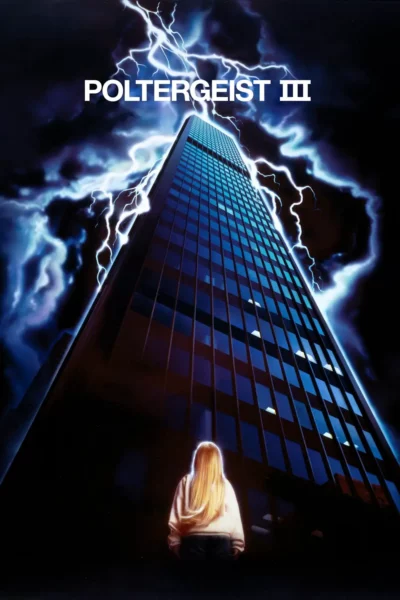
Poltergeist III closes out the trilogy and perfectly illustrates the classic sequel curse of diminishing returns—something horror franchises know all too well. Only two original cast members return: Heather O’Rourke as Carol Anne and Zelda Rubinstein as Tangina. This time, the story trades the cozy suburban hauntings for a sleek Chicago high-rise in an attempt to shake things up. Critics panned it, and audiences mostly stayed away, but honestly? I kind of have a soft spot for this one.
In Poltergeist III, Carol Anne Freeling is sent to live with her aunt and uncle in Chicago, far from the familiar suburbs of her previous encounters with the supernatural. As she struggles to adjust, malevolent forces return, led by the sinister Reverend Kane, who seeks to lure her “into the light”. The building’s endless mirrors create a disorienting maze where reflections reveal horrors unseen in reality, while Carol Anne’s teenage cousin and her friends find themselves drawn into the escalating terror. With skeptics questioning her experiences and the supernatural escalating around her, Carol Anne must confront Kane once again, navigating a visually striking, mirror-filled nightmare that tests her courage and resourcefulness.
Poltergeist III adds some recognizable names to the cast, with Tom Skerritt and Nancy Allen stepping in as Carol Anne’s aunt and uncle. Their daughter, played by a young Lara Flynn Boyle—who’d soon rise to fame thanks to a little show called Twin Peaks—brings a new energy to the mix. The family dynamic feels noticeably different from the previous films, giving Poltergeist III a fresh angle. And with the addition of the teenage niece and her friends, the movie leans a bit closer to the slasher-heavy territory of Friday the 13th and A Nightmare on Elm Street, where “teenagers” played by twenty-somethings took center stage.
Poltergeist III leans into a classic sequel trope: the skeptical investigation of past supernatural events. This time, Carol Anne finds herself under the scrutiny of a psychiatrist who believes she’s capable of mass hypnosis rather than being haunted by a malevolent force. Naturally, he’s dead wrong. The sinister Reverend Kane returns, still determined to lure Carol Anne “into the light”.
Originally portrayed by Julian Beck, who tragically passed away shortly after Poltergeist II, Kane is now played by Nathan Davis, heavily made up to resemble Beck as closely as possible. Interestingly, this version of Kane never gets full dialogue scenes—he mostly appears as a shadowy figure, a sudden reflection, or a background presence meant to unsettle. The illusion works surprisingly well; when I first saw the movie back in the early ’90s, I was convinced it was still Beck beneath the makeup.
Poltergeist III is widely considered the weakest entry in the trilogy—but honestly, I kind of like it. The plot may be a mess, but it’s stuck with me more than Poltergeist II. The shift from cozy suburbia to a sleek high-rise gives the film a fresh atmosphere and aligns it with an unofficial horror trend of the late ’80s and early ’90s: sequels abandoning small-town homes for big-city chaos. Gremlins 2, Critters 3, Leprechaun 3, Hellraiser III, and Bloodline all followed the same trajectory—trading picket fences for skyscrapers. In that sense, Poltergeist III feels like a natural evolution for the series. And honestly, it’s probably for the best that it ended here—otherwise, the next one might’ve taken place in space.
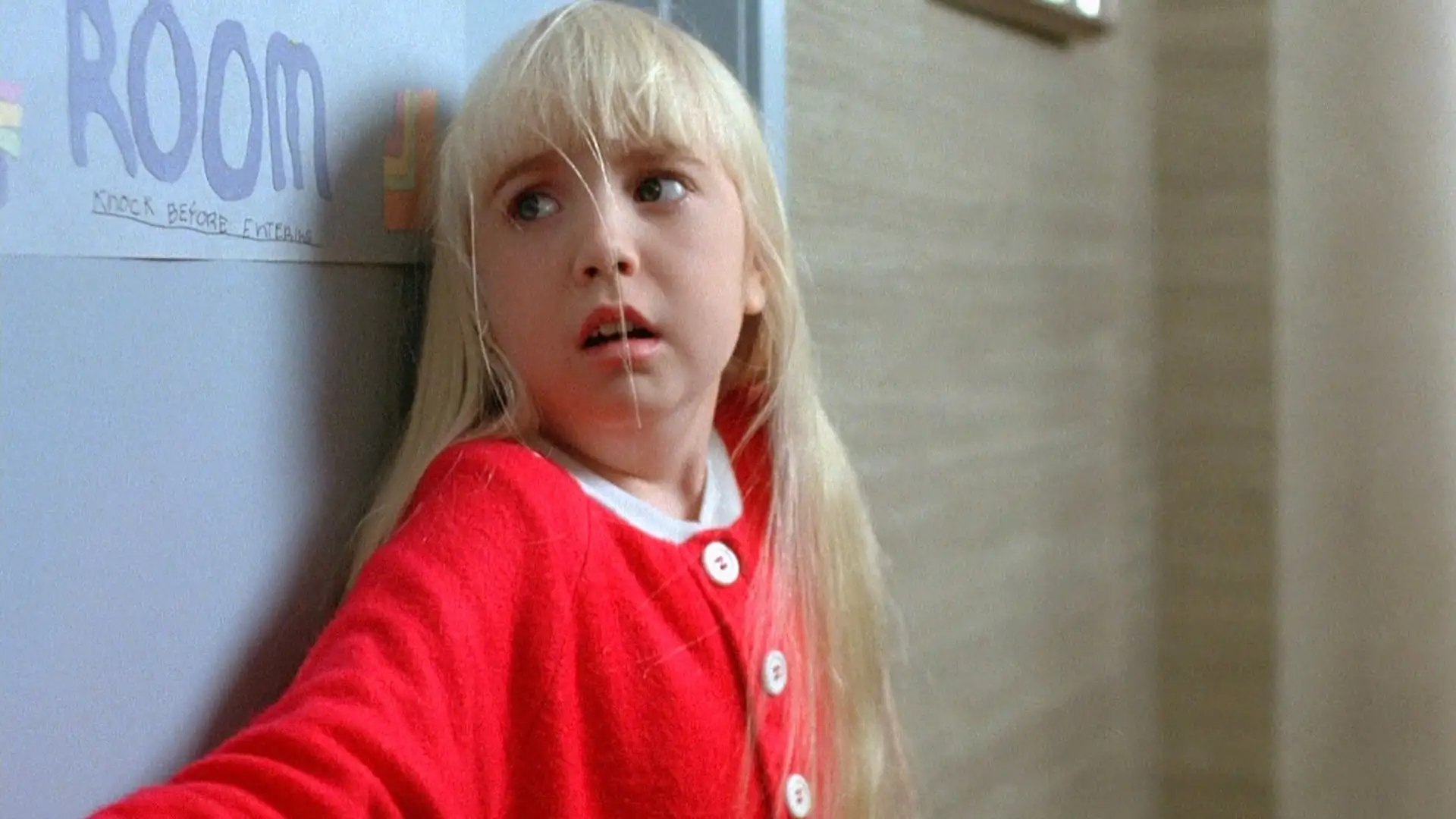
The high-rise itself is a cold, colorless presence—an expanse of dull grays that perfectly contrasts with Carol Anne’s bright red pajamas, which she wears for most of the film. The visual contrast is striking, especially in a movie already packed with mind-bending shots that make you wonder how they were even pulled off. The building is lined with mirrors—so many, in fact, that it sometimes feels less like an apartment complex and more like a twisted funhouse. Even Carol Anne’s bedroom is covered wall-to-wall in reflective surfaces. Honestly, I wouldn’t want to be the one stuck cleaning that room.
Mirrors are the film’s defining motif and central gimmick. Characters—and the audience—see reflections that don’t quite match reality, creating a constant sense of unease. It’s a clever touch that gives Poltergeist III a distinct identity, something the earlier sequels lacked. The first two tend to blur together in memory—was it the second one where Carol Anne’s brother’s braces started growing out of his mouth? I think so, but it’s hard to tell—they share such a similar tone and style.
You can’t talk about Poltergeist III without acknowledging the tragedy of Heather O’Rourke’s death before the film’s release. It casts a somber shadow over the movie, and watching her here as the witty, sharp-tongued 11-year-old Carol Anne really underlines the immense potential she had as an actress. Sadly, Heather was ill during filming and passed away before they could reshoot the ending, which meant a double had to stand in for her in the final scenes. Knowing this makes the ending feel strangely hollow—the “happy” resolution carries a weight of melancholy that’s impossible to ignore.
Poltergeist III is often labeled the weakest entry in the series, and I can’t really argue with that. But on a personal level, I enjoy it—there’s a creativity on display that feels intentional, like someone really tried to craft something original rather than just rehashing the first movie. That effort alone gives it a charm other sequels often lack.