Published on
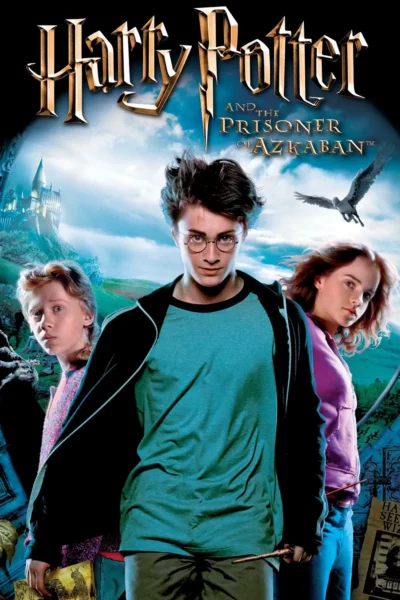
Skipping a November 2003 release, the third installment of the Harry Potter series arrived instead as a full-fledged summer blockbuster in 2004. Harry Potter and the Prisoner of Azkaban marks a decisive turning point for the franchise: the young leads are visibly entering puberty, a new director takes the reins, and a new Dumbledore steps in following the death of Richard Harris.
Harry Potter, Ron and Hermione return to Hogwarts School of Witchcraft and Wizardry for their third year of study, where they delve into the mystery surrounding an escaped prisoner who poses a dangerous threat to the young wizard.
Harry Potter and the Prisoner of Azkaban largely resembles the template established by the first two films, hitting many of the same familiar beats. Once again, we follow Harry, Ron, and Hermione through a full school year as they unravel a central mystery, though not before Harry gets into trouble at the Dursleys’ house and makes a memorably unconventional journey to Hogwarts. This time it is via a runaway London triple-decker bus that would not feel out of place in a Ghostbusters movie.
There are classes and new teachers, a mystery with a twist or two, and, of course, the usual run-ins with Snape and Malfoy. This repetition is the film’s weakest aspect, giving the impression that the series is beginning to tread familiar ground rather than breaking new narrative territory.
Malfoy is increasingly becoming the series’ weakest link. The snotty brat worked as a straightforward antagonist in the first two films, back when the characters were still children. But as Harry, Ron, and Hermione begin edging toward adulthood—and facing problems far more serious than playground bullying—Malfoy’s whining disdain feels less threatening and more irritating, more of a nuisance to the audience than to the characters themselves.
The most frustrating example comes with his jealousy over Harry’s ability to tame the fearsome Buckbeak. After deliberately provoking the creature and receiving nothing more than a scratch, Malfoy exploits the incident to push for Buckbeak’s execution, a prospect he then greets with gleeful cruelty. Yet even here, Malfoy’s actions have little real impact on the broader story. His presence feels mandatory rather than justified, ultimately doing a disservice to a character who no longer fits the scale of the narrative.
Aside from the characters visibly aging, the film’s biggest tonal shift comes from its direction. Harry Potter and the Prisoner of Azkaban is noticeably darker in both style and mood. The main characters now roam Hogwarts in contemporary street clothes rather than timeless wizarding robes, and their hairstyles firmly root the film in the early 2000s. The warm, inviting colour palette of the previous entries is replaced by a more desaturated, muted look, with less emphasis on the wonder of the wizarding world and more focus on the story itself.
This is not inherently a bad thing, but it does strip away some of the… well, magic of the series. Where the first two films at least allowed sunlight to break through, The Prisoner of Azkaban keeps ominous clouds permanently hanging over Hogwarts. Even the obligatory Quidditch match unfolds amid a thunderstorm. This approach may serve as a visual precursor to the eventual return of Voldemort, but personally, I am not a fan of the bleaker, desaturated aesthetic.
That said, the darker approach does suit a more mature story, one that deals with werewolves and even the looming execution of an innocent animal as key plot elements. The narrative also introduces time travel, which proves to be the film’s highlight and a clever gimmick that gives this entry its own distinct identity within the series.
Harry Potter and the Prisoner of Azkaban also does more groundwork for future instalments than its predecessors, most notably through the introduction of Peter Pettigrew, a character whose significance will echo throughout the films that follow.
One of the biggest selling points of Harry Potter and the Prisoner of Azkaban is the casting of Gary Oldman as Sirius Black. Yet he remains off-screen for much of the film, only properly appearing in the third act and even then in just a handful of scenes. Still, as the titular character, his presence looms large over the entire story. British acting royalty Emma Thompson also turns up in a small role as a professor, but it is the then relatively unknown David Thewlis, playing Professor Lupin, the latest Defence Against the Dark Arts teacher, who emerges as the film’s most significant new addition. As with all teachers of that subject, it is only a matter of time before a plot twist reveals their true nature, and The Prisoner of Azkaban delivers on that expectation.
Harry Potter and the Prisoner of Azkaban marks a clear step toward a more adult, mature tone. While this evolution is necessary as the cast grows older, it also makes the film feel less magical than its predecessors. Even so, the high bar set by the first two entries is one that this third installment ultimately manages to reach.