Published on
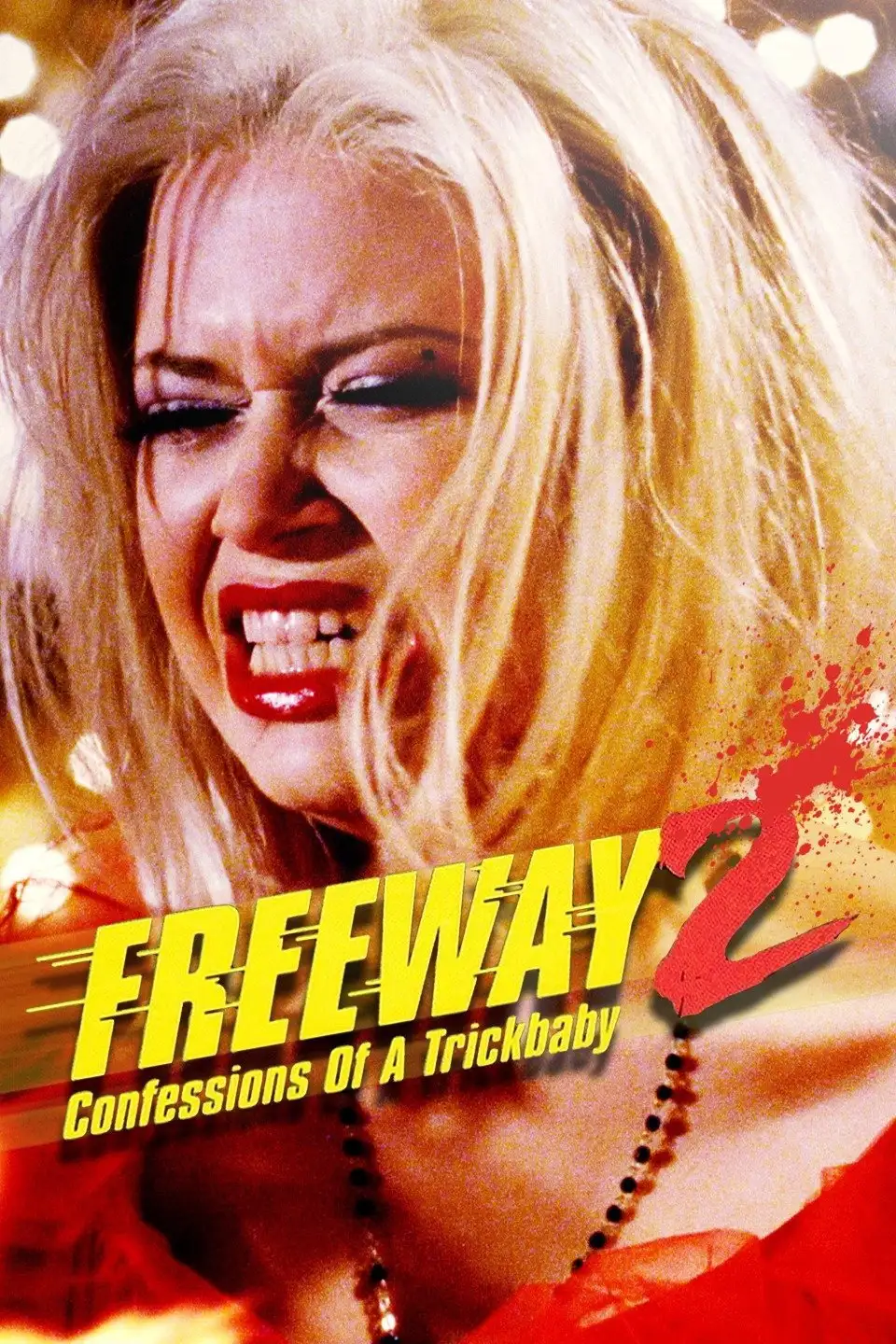
I’m obviously biased when I say the 1990s were the best decade for movies, since I grew up with them. But I also think it’s fair to argue they were the last truly great era for cinema. Starting in the 2000s, original ideas increasingly took a backseat to established IPs and franchise filmmaking. The ’90s were different: independent cinema exploded, studios were willing to greenlight bold high-concept ideas, and filmmakers could still take real creative swings. A movie like Freeway feels like the perfect example of something that could only have been made in the ’90s.
Freeway follows Vanessa Lutz, a foul-mouthed and street-smart teenager from an abusive, dysfunctional home who decides to travel across Los Angeles to stay with her grandmother after her parents are arrested. Along the way she accepts a ride from seemingly charming psychologist Bob Wolverton, unaware that he is a serial killer targeting young women. What begins as a twisted modern take on Little Red Riding Hood soon spirals into a chaotic mix of crime thriller, black comedy, courtroom drama, and prison movie, as Vanessa fights to survive a system and a world stacked entirely against her.
Freeway never got much attention when it was released, and it’s one of those movies I randomly stumbled across while flipping channels in the late 90s. What immediately grabs your attention is Reese Witherspoon’s performance as Vanessa Lutz, a 14-year-old illiterate daughter of a crack-addicted mother with a fiercely confrontational attitude that she dials up to eleven here. She’s completely magnetic in the role and steals every scene she shares with anyone else in the cast.
The story itself doesn’t really follow a conventional three-act structure, which makes it such an unpredictable watch. The boom of ’90s independent cinema produced a lot of movies that threw absolutely everything at their protagonists, and Freeway fully embraces that chaotic energy. It starts as a story about a young girl trying to reach her grandmother to avoid ending up in the foster system, but then she crosses paths with a serial killer, ends up in court, lands in jail, and somehow the movie still has another half hour left to escalate even further
This does make the movie feel a little all over the place at times, and Kiefer Sutherland’s Bob Wolverton suffers the most because of it. He’s introduced as the film’s central menace in the first act, but once Vanessa escapes his clutches, the movie shifts its focus toward the courtroom and prison storyline, pushing him into the background. His character gradually turns into more of a punchline, largely centered around his facial disfigurement, so when the film suddenly pivots back to him as the main villain for the finale, it feels somewhat awkward and uneven.
R-rated movies are relatively rare in the mainstream today, but in the ’90s not everything was designed with young teenagers in mind. Freeway absolutely earns its rating, with several brutally violent scenes, constant profanity, an entire barrage of racial slurs in one particularly uncomfortable sequence, and dark subject matter ranging from incest to child abuse. Yet somehow it packages all of that into something oddly crowd-pleasing. Or at least as crowd-pleasing as a movie like this can be, because even though it technically ends on a happy note, Vanessa is still heading back to a life stuck at the very bottom of society.
The Little Red Riding Hood angle is mostly used in broad strokes rather than as a literal retelling. Vanessa is traveling to her grandmother’s house while being hunted by a serial killer who eventually even ends up in grandma’s bed, but beyond that the similarities are fairly loose. The movie mainly sprinkles in small visual nods, like Vanessa frequently wearing red or carrying a wicker basket filled with her belongings, instead of fully committing to a direct adaptation.
Freeway might not rank among the very best films to come out of the edgy and dark ’90s indie boom, and these days it’s largely forgotten rather than celebrated as a cult classic, which is a bit of a shame. It’s undeniably messy and far from perfect, but there’s still a lot to enjoy here, especially Reese Witherspoon, who is an absolute force of nature in one of her earliest leading performances.