Published on
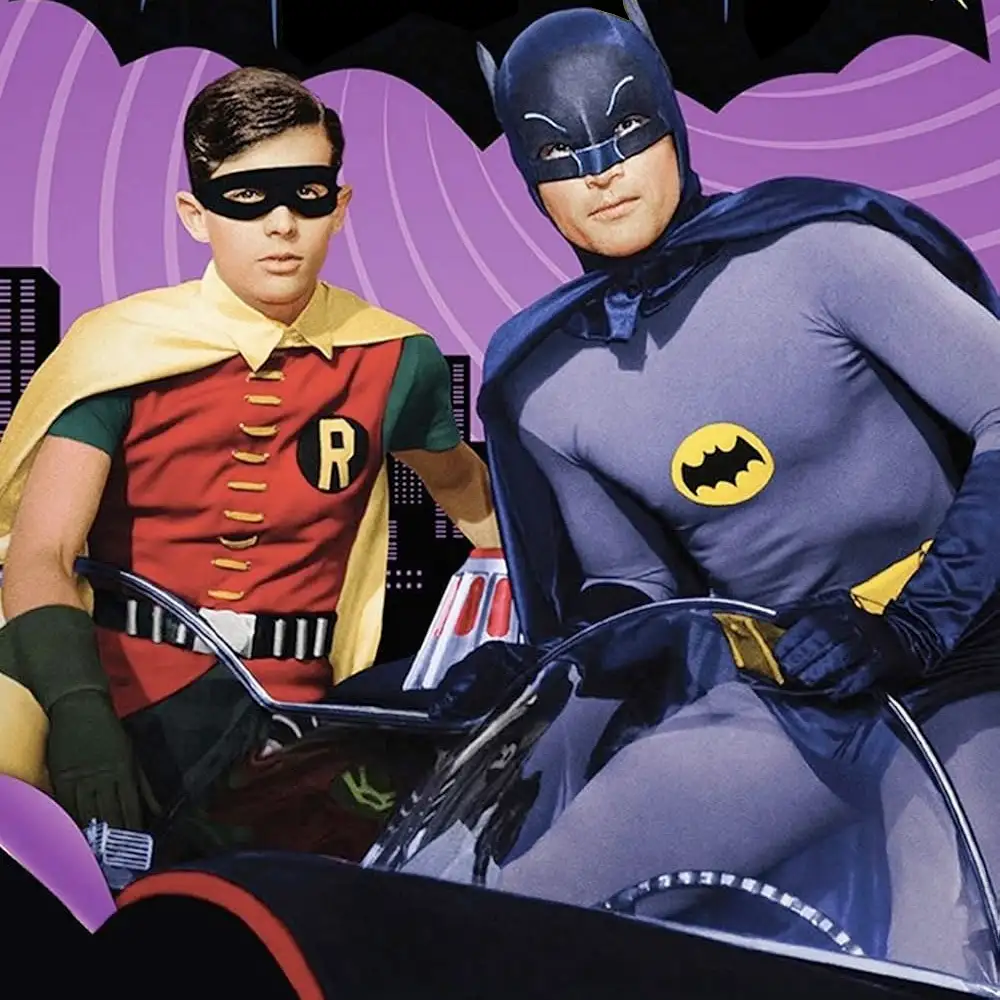
When Batman was released in 1989, its most defining and revolutionary feature was its darkness, especially when contrasted with the campy 1960s TV show. That series had turned Batman into a punchline, but in the 1980s comic-book writers and artists like Frank Miller and Alan Moore reimagined the character as a grim, brooding superhero. Fans were thrilled that Batman was finally being treated with seriousness again.
So when the film was announced—and it was revealed that Michael Keaton would star—many feared the character would once more be reduced to a joke. Those fears proved unfounded, but the reaction underscored something else: an interpretation that was once beloved had, by then, become widely reviled.
When Joel Schumacher took over to direct Batman Forever and Batman & Robin, he did exactly what fans in 1989 had feared would happen. He reintroduced the same goofy, camp-heavy tone of the 1966 TV show, only this time with a massive budget. While Batman Forever flirted with that approach, Batman & Robin fully embraced it, essentially becoming the ’60s TV series blown up to IMAX proportions and shot in widescreen.
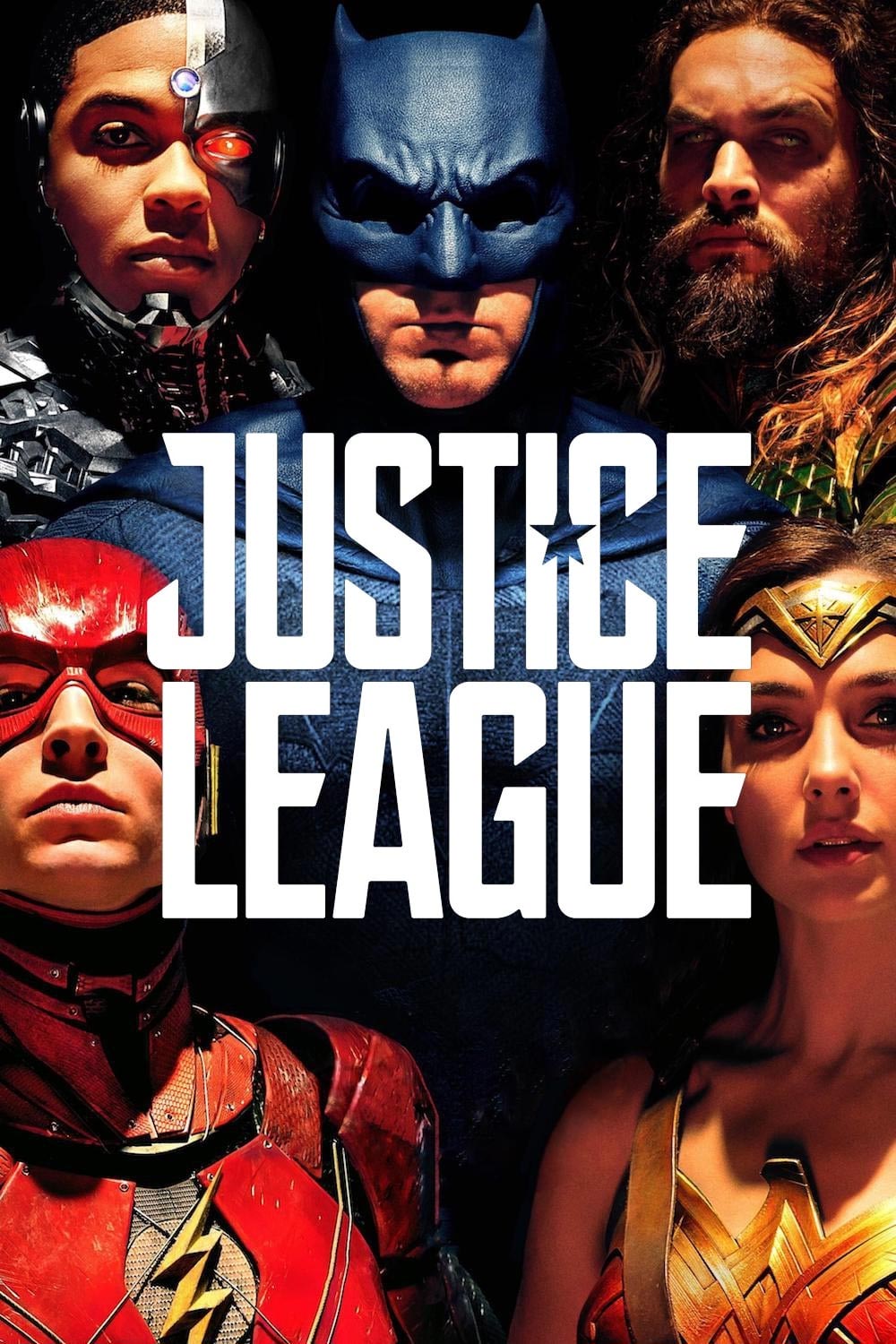
The result was a disaster, one so severe that several people involved later felt compelled to apologize for it. Since then, a silly or campy Batman has effectively been taken off the table. Modern Batman adaptations have leaned hard into being grounded, gritty, and realistic. Over the past 30 years, the films have allowed very little room for humor. Even Ben Affleck’s Snyderverse Batman—slightly lighter in tone than Bale’s or Pattinson’s—exists mostly within ensemble films that are themselves dark and serious, with the notable exception of Joss Whedon’s Justice League.
Long story short, the TV show is widely regarded as an embarrassment to the character, and the prevailing belief is that Batman simply has to be dark and gritty.
And yet, over the past few months, I’ve been rewatching the classic TV series, reputation firmly in mind, and I was surprised to discover something unexpected. Again and again, those dark, gritty Batman films borrow directly from the very show they try so hard to distance themselves from. Lines of dialogue, plot devices, and in some cases entire scenes trace their origins back to the TV series decades earlier. Joker breaking into a museum and vandalizing priceless art? That happened on the TV show twenty years before Jack Nicholson did it to a Prince soundtrack.
For a series so often dismissed or mocked, the influence of the TV show is everywhere. So I started taking notes. What follows are moments from the films that were quietly—and sometimes not so quietly—pioneered by the TV show long before Batman got “serious”.
The Joker breaks into a museum and takes over a TV broadcast
The Joker makes his first appearance in the series in episode five, titled “The Joker Is Wild” (Season 1, episode 5), which shares its name with a Frank Sinatra film released nine years earlier. The episode introduces the character with an escape from prison and pits him against Batman using a utility belt of his own.
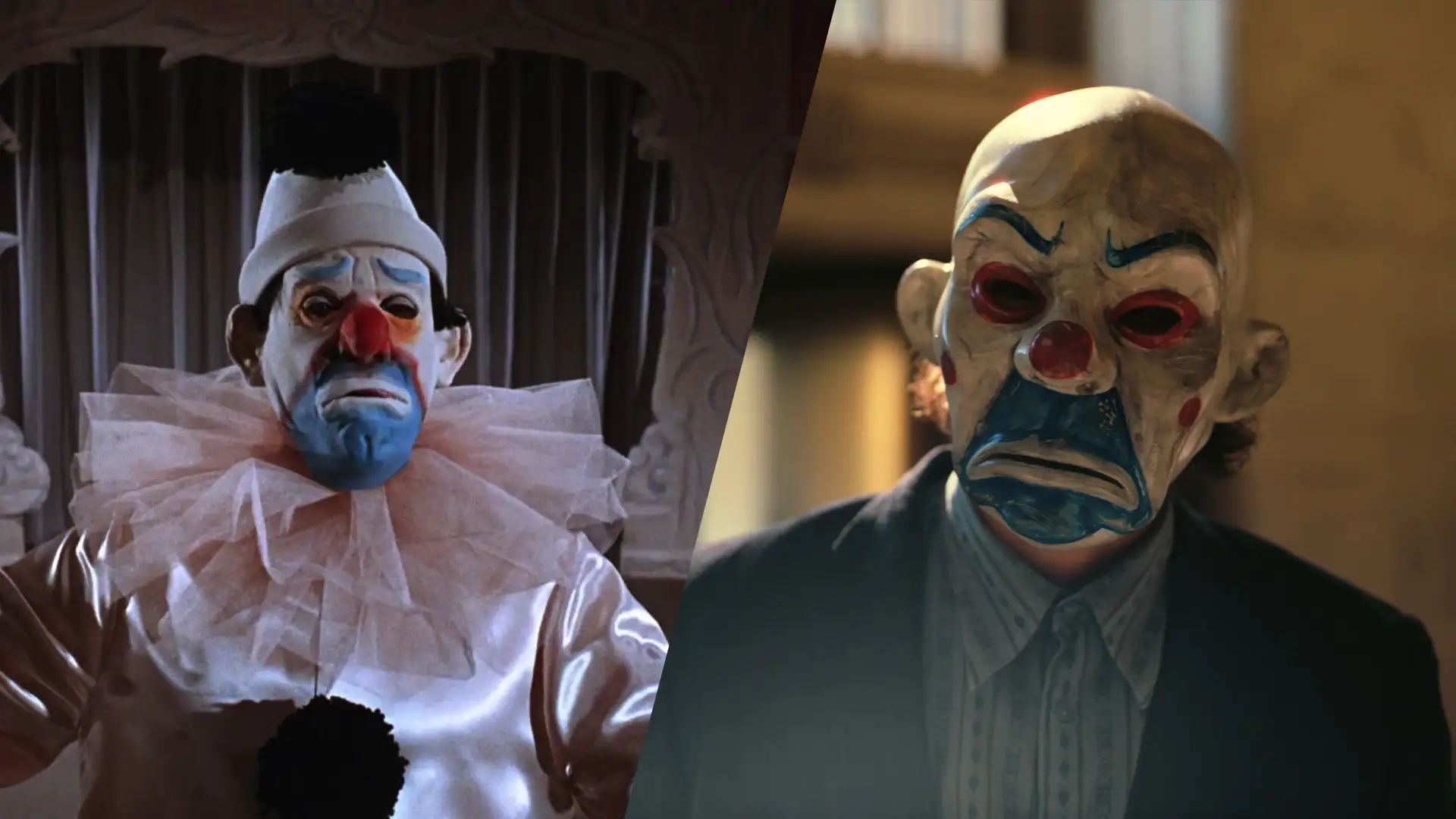
One of the episode’s most notable elements is its direct visual callback in Christopher Nolan’s The Dark Knight. The Joker wears the same mask later used by Heath Ledger during the opening bank-heist sequence. Beyond this playful reference, the episode also contains two moments that closely resemble scenes from Batman.
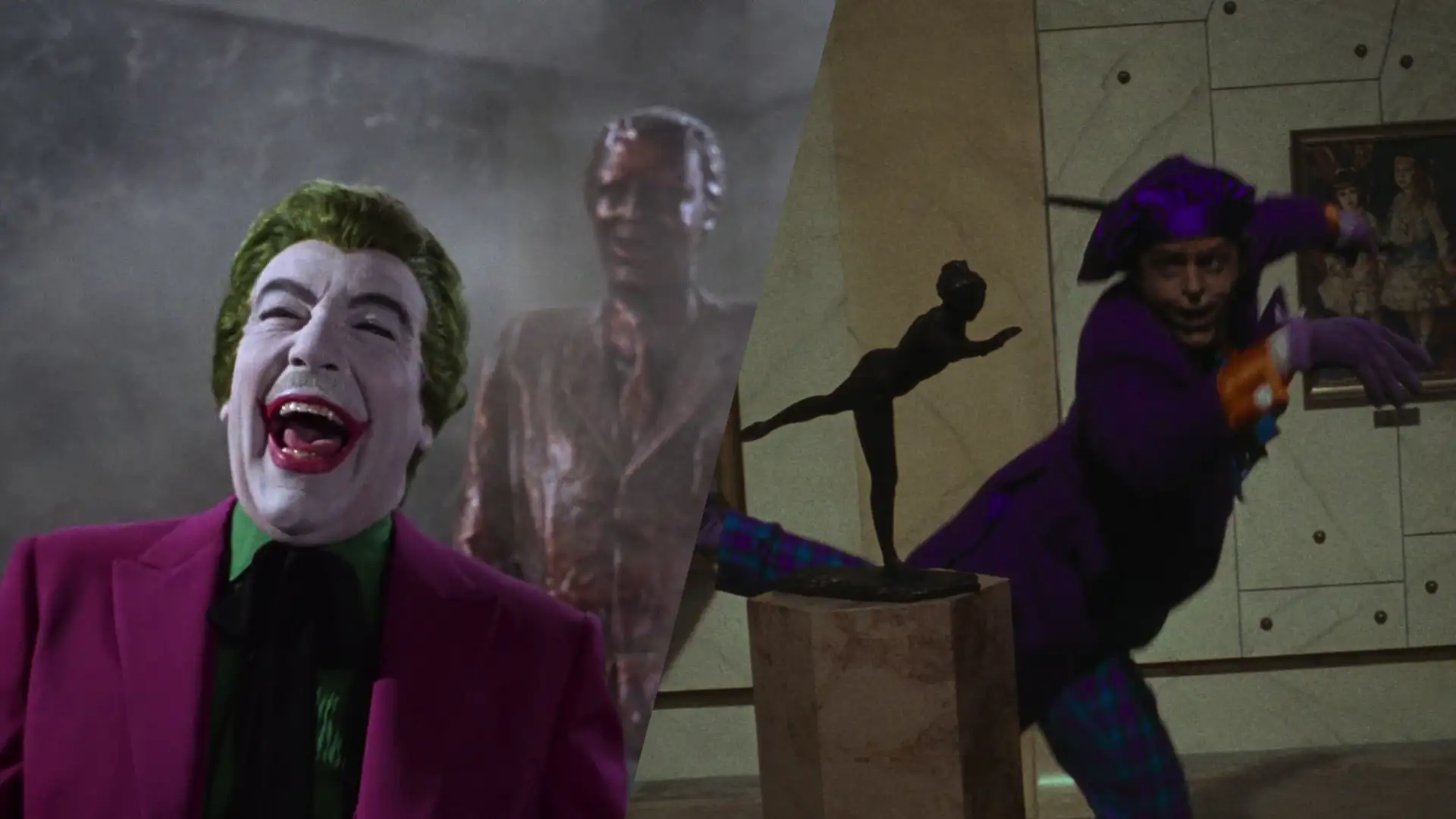
The Joker breaks into a museum—this time focusing on statues rather than paintings—and while he doesn’t vandalize the artwork, the narrative beat is strikingly similar. He also hijacks a television broadcast, a device later reused by the Joker in both Batman and The Dark Knight.
Batman & Robin are frozen
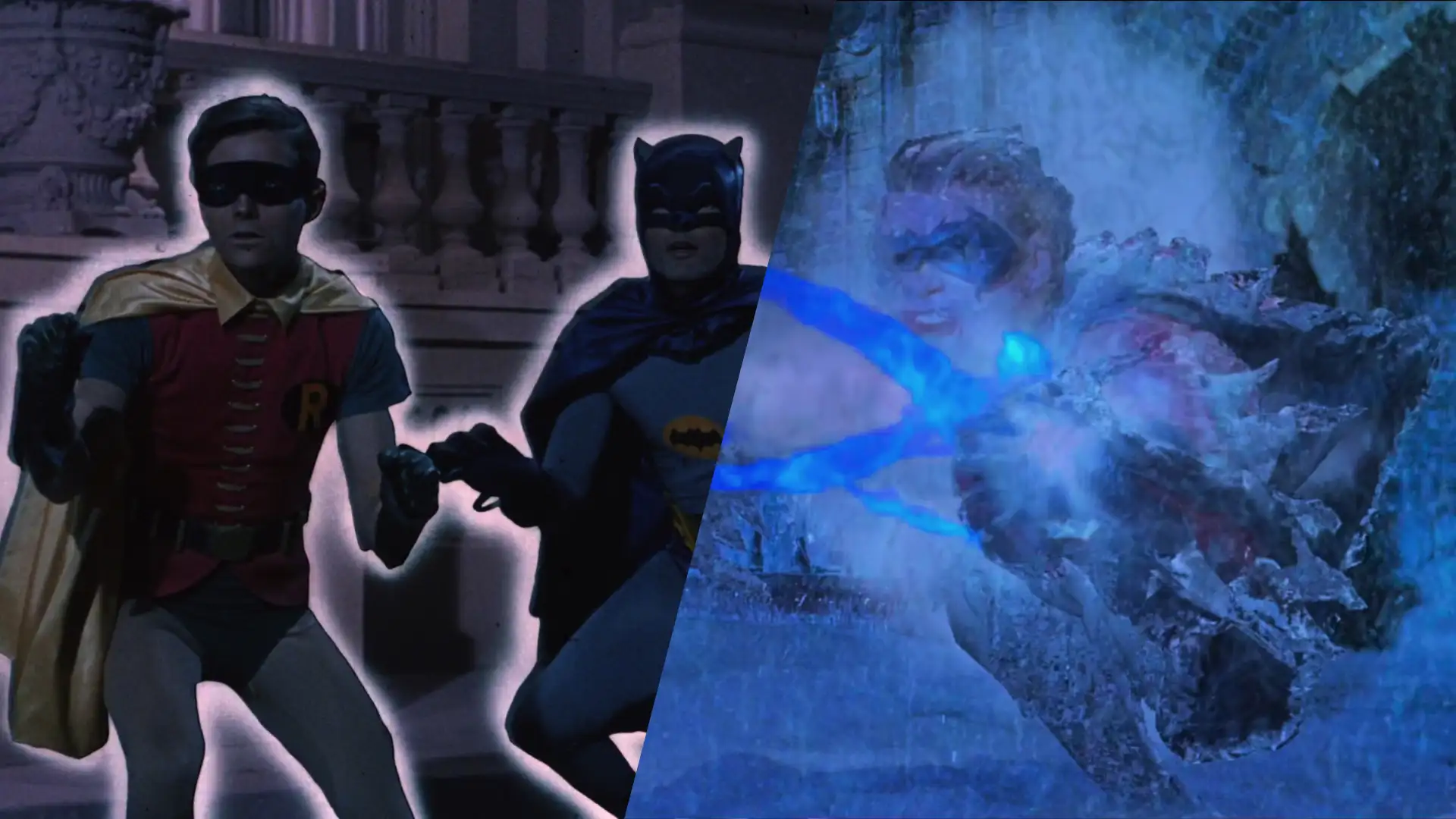
One of the more memorable moments from Batman & Robin —aside from the barrage of Mr. Freeze puns—is the scene in which Mr. Freeze shoots Robin with his ice gun, instantly turning him into a frozen popsicle encased in ice.
The TV show features a similar cliffhanger in the episode “Instant Freeze” (season 1, episode 7), with both Batman and Robin blasted by Mr. Freeze’s freeze gun and left as giant human popsicles. The effect is understandably simple: a still image of the two characters, darkened and enhanced with a glowing overlay. It’s a gag that likely originated in the comics as well, but it’s fun to see just how much the idea changes when revisited 30 years later with a vastly larger budget.
The Penguin fakes being a hero
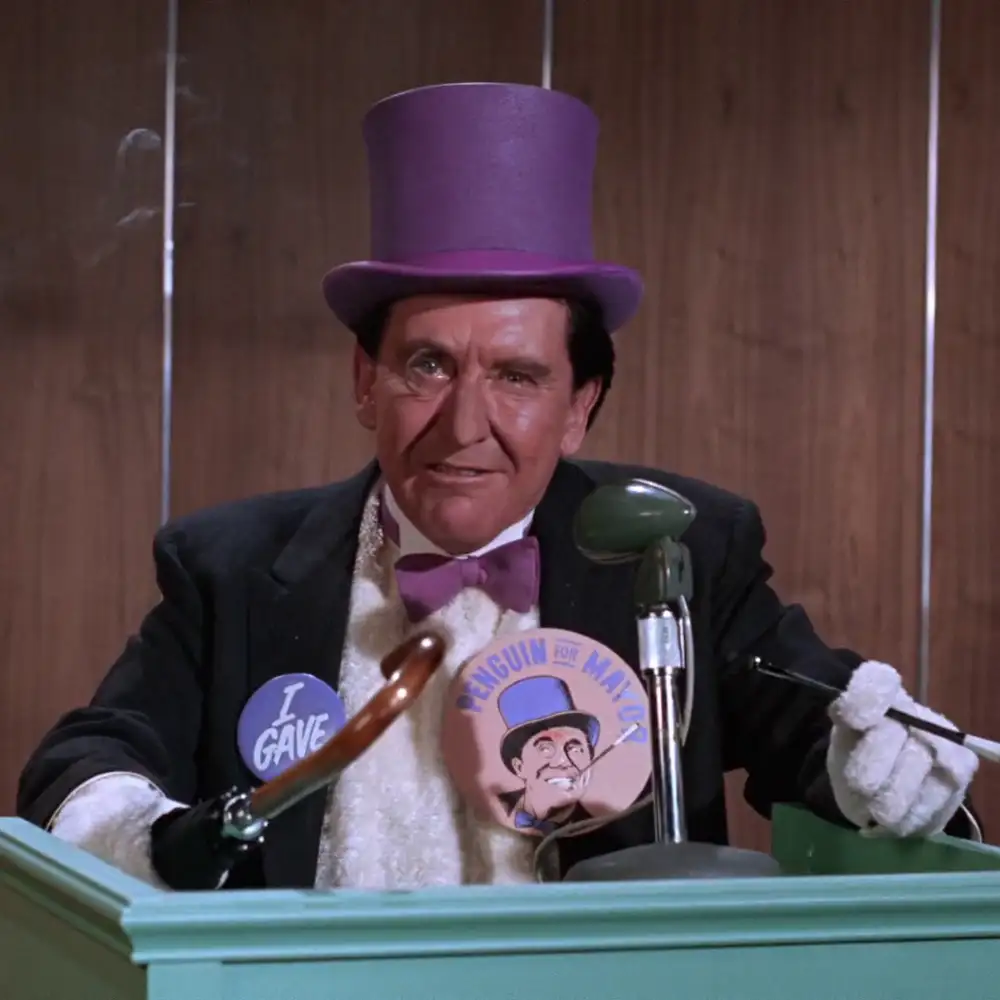
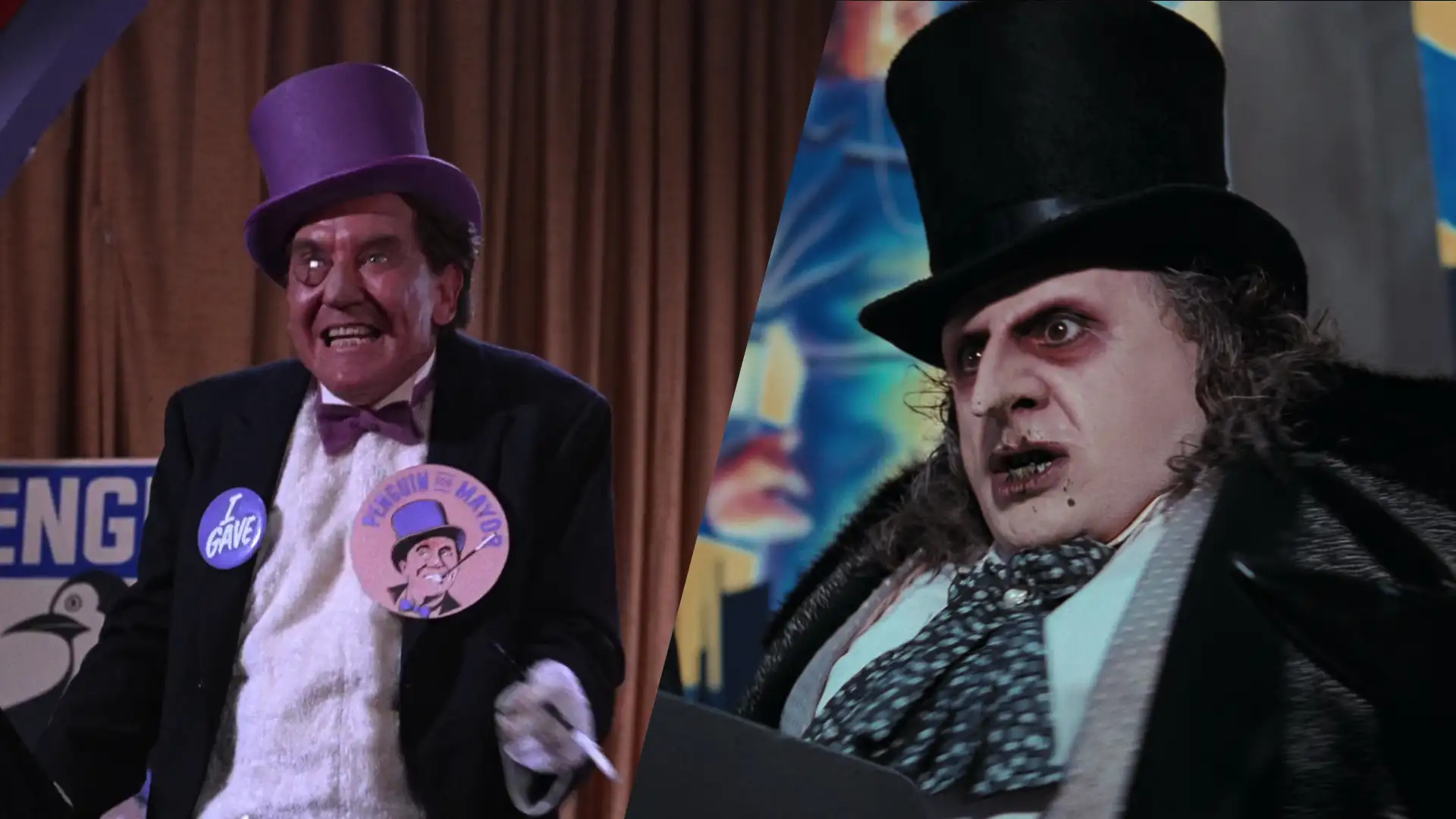
In Batman Returns, the Penguin’s scheme hinges on presenting himself as an upstanding citizen. To convince the public, he stages the foiling of a baby kidnapping and is celebrated as a hero. A similar plot appears in the TV episode “The Penguin Goes Straight” (season 1, episode 21), where he disrupts a theater stick-up carried out by his own henchmen. Variations on this con recur throughout the series, including staged kidnappings.
Batman and Robin immediately suspect that Penguin hasn’t truly gone straight—and they’re right—much like Batman’s instant suspicion of Danny DeVito’s Penguin in Batman Returns. In the film, Penguin ultimately leverages his manufactured hero status to launch a campaign for mayor, a point we’ll return to later.
“You wouldn’t hit a guy with glasses”
It’s a small moment in “The Bookworm Turns” (season 1, episode 29), but just before fighting Bookworm’s henchmen, Batman tells them to remove their glasses, reminding Robin that one should never hit a man wearing glasses. Decades later, Batman echoes the beat when Jack Nicholson’s Joker slips on a pair of specs and taunts, “You wouldn’t hit a guy with glasses”, during the final showdown.
The villain creates a mind reading device that might give away the true identity of Batman
Egghead was a villain created specifically for the TV show, defined primarily by his super-intellect. In his only solo outing, he invents a mind-reading device that looks suspiciously like a salon hood dryer in the episode “An Egg Grows in Gotham” (season 2, episode 13).
In Batman Forever, the Riddler develops a box capable of extracting the brainwaves of Gotham’s citizens. In the TV episode, the cliffhanger ends with Egghead attempting to read Bruce Wayne’s mind—unaware that he’s about to uncover Batman’s secret identity. In Batman Forever, the device succeeds, revealing Batman’s identity to the Riddler and directly leading to the villains breaking into the Batcave.
The Penguin runs for mayor of Gotham City
In the 1960s Batman TV series, memory lapses seemed universal—villains like the Penguin kept recycling the same schemes. Take the earlier episode “The Penguin Goes Straight,” where he fakes heroism to win Gotham’s trust. Fast forward to another episode, “Hizzonner the Penguin” (season 2 episode 17), and he’s repeating the trick: foiling a stick-up on a sunny street while a cop looks on. But here’s where it gets interesting—this time, the Penguin actually runs for mayor, echoing the plot of Batman Returns. He skips the nose-biting incident of the previous episode, but to stop him, Batman himself runs for mayor—a scenario only plausible in the whimsical, rule-bending world of the 1960s show.
Robin is under spell of a love potion
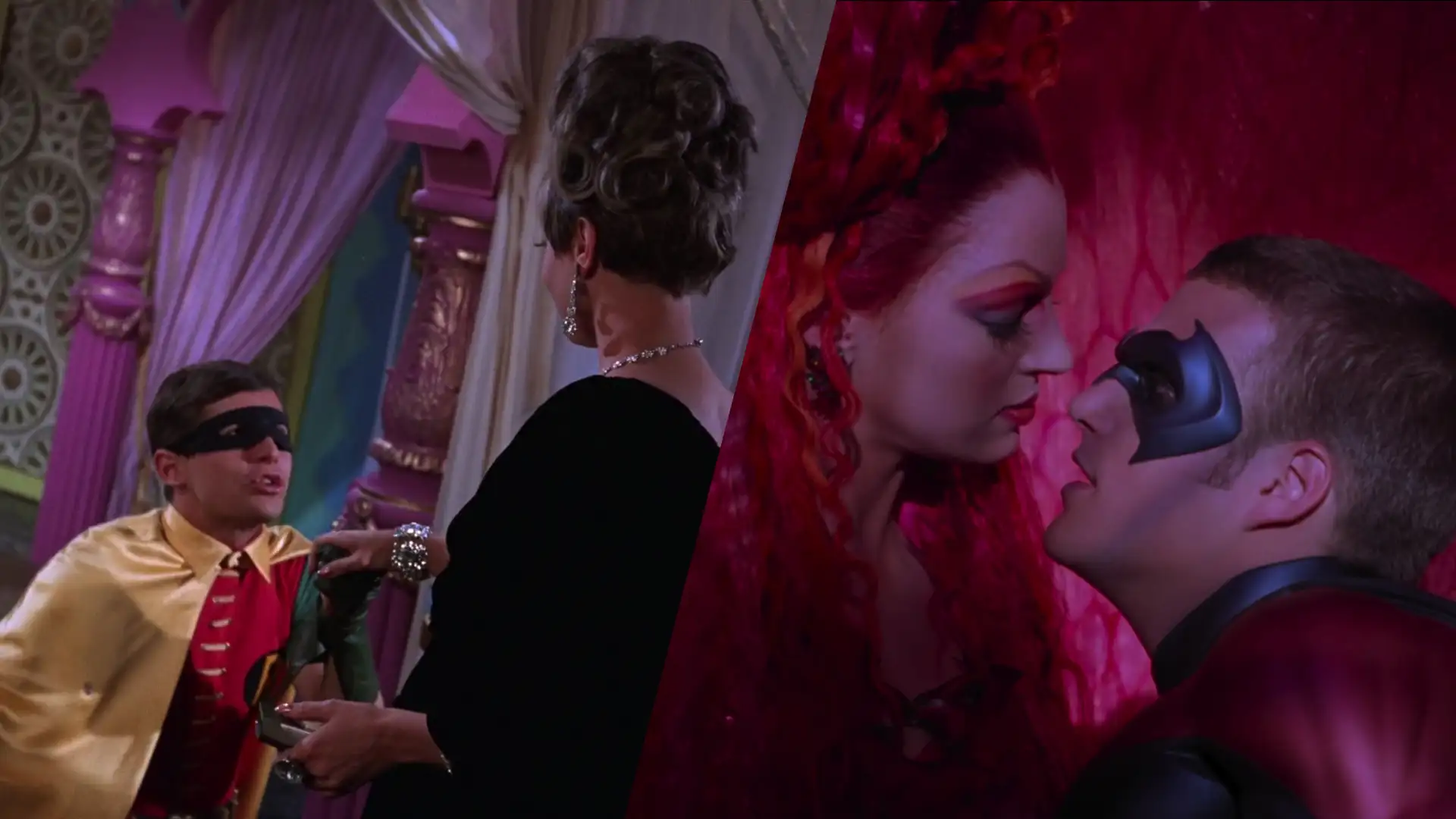
One frequent criticism of the 1960s Batman TV show was its focus on original villains over classic comic book foes. Take Marsha, Queen of Diamonds—true to her name, she’s obsessed with diamonds and uses a love potion to control men, starting with Chief O’Hara and eventually even Robin. Poison Ivy never appeared in the TV show, but she became a key villain in Batman & Robin. There, she employs plant-based toxins to concoct a love potion, bending both Batman and Robin to her will—strikingly similar to Marsha’s earlier antics.
The Joker defaces paintings in a museum/art gallery
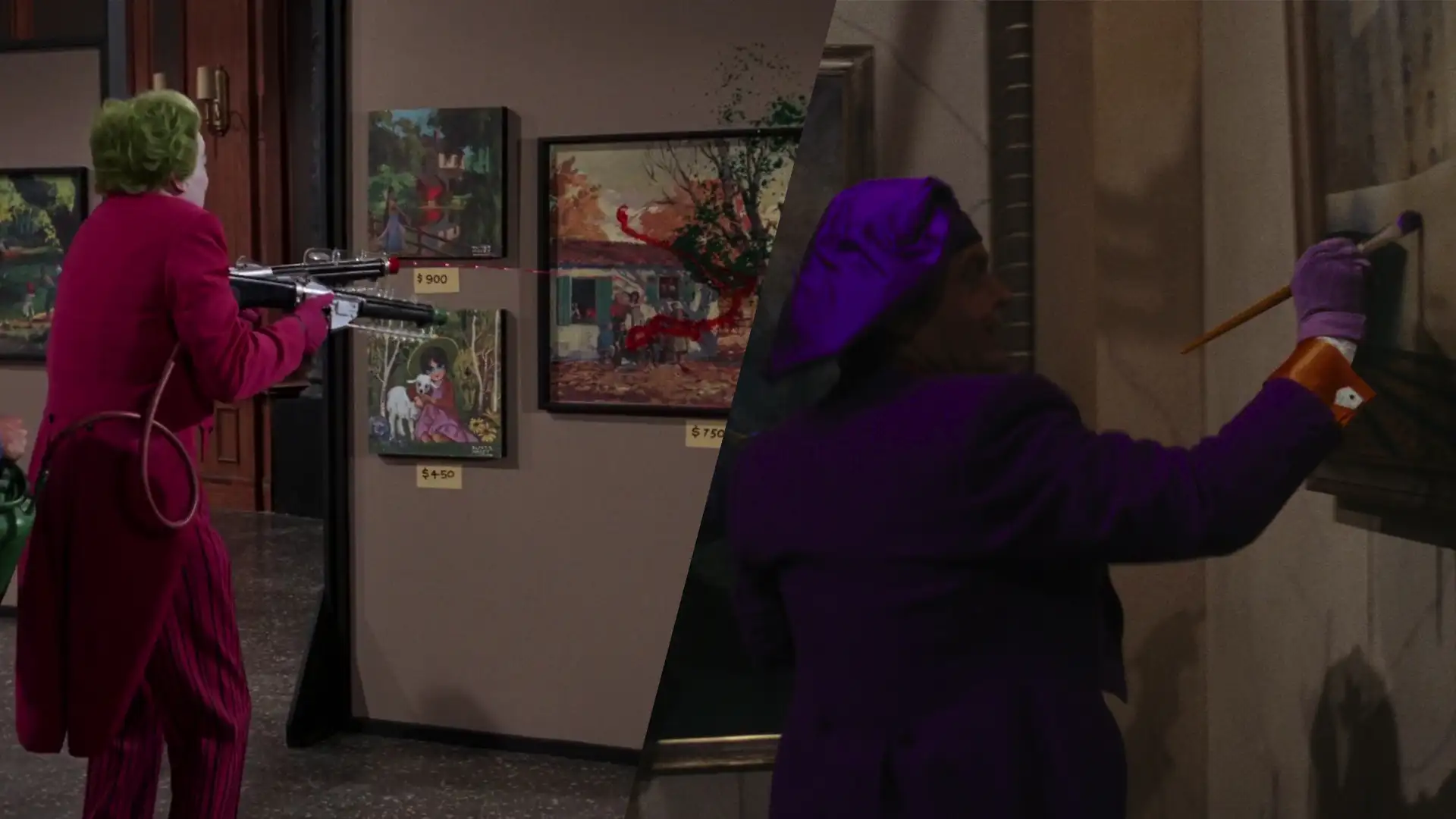
I realize that aside from “Hizzonner the Penguin”, which is basically a blueprint for Batman Returns minus the child abduction subplot, most of these similarities are minor or trace back to the comics. But the episode “Pop Goes the Joker” (season 2, episode 57) features a scene so strikingly similar to Tim Burton’s 1989 Batman that the only thing missing was a Prince song. In the episode, Cesar Romero’s Joker ambushes an art gallery armed with paint guns and goes on to deface all the artwork. Sound familiar? Jack Nicholson’s Joker does almost the exact same thing in Batman—breaking into an art gallery and painting over the pieces. It’s a perfect example of how the darker, grittier 1980s reimagining of Batman still borrowed from the campy ’60s show, completely under the radar at the time.
A villain uses fear gas on Batman
Here’s another case of the TV show influencing the films: original villain Shame. Perhaps the most ridiculous villain ever conceived for the show—just a guy in a cowboy outfit pretending it’s still 1883—but in his final appearance in season three’s “The Great Escape” (Season 3, episode 21), Shame uses a fear spray on Batman, Robin, and Batgirl, leaving them nearly catatonic. That’s basically the same weapon used by the Scarecrow, who would later appear in Christopher Nolan’s Batman Begins, grounding the character in realism. Only difference: the Scarecrow wears a burlap sack instead of a cowboy hat.
It’s ironic that Tim Burton’s dark and serious Batman films borrow more from the 1960s TV show than Joel Schumacher’s campy entries ever did. Meanwhile, Christopher Nolan seems to have either never watched the classic show or deliberately avoided using it as inspiration for his Dark Knight trilogy, aside from that one subtle mask reference.
These are the surprising links I found between the campy TV show and the more serious Batman films. If you’ve seen the show and spotted other similarities, drop them in the comments—I’ll add them to the list!