Published on

Just recently, I revisited The Wire, the landmark series created by David Simon. While writing an article about the show, I stumbled upon another acclaimed Simon project: The Deuce. Set against the grimy backdrop of 1970s and 1980s New York City, the gritty drama chronicles the rise of the porn industry and the transformation of Times Square during one of the city’s most chaotic and fascinating eras.
The show centers on twin brothers Vincent and Frankie Martino, both played by James Franco, alongside sex worker-turned-filmmaker Eileen “Candy” Merrell, portrayed by Maggie Gyllenhaal. Over the course of the series, it dives deep into organized crime, police corruption, prostitution, addiction, and the commercialization of sex during a period of massive urban and cultural change. In many ways, it feels like The Wire transplanted into the adult entertainment industry — swapping the drug trade for the rise of porn in a decaying yet rapidly evolving New York City.

Having enjoyed The Wire immensely — both as gripping entertainment and as a layered examination of inner-city life and the drug trade — I was curious whether David Simon could pull off something similar with pornography as the central subject. While plenty of people use drugs, even more consume porn, yet there remains a far heavier stigma surrounding pornography and prostitution than drug use, which has become almost mainstream over the decades.
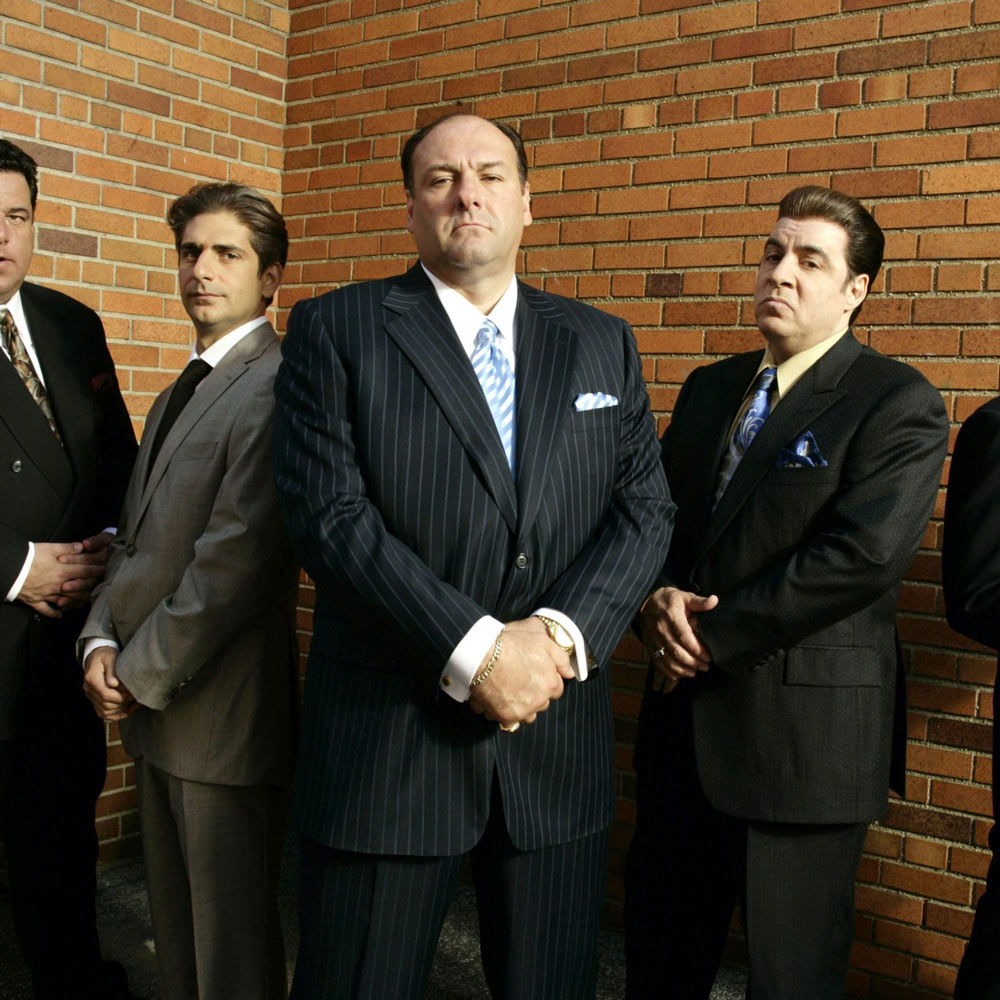
That makes The Deuce a far riskier undertaking, and arguably more of an acquired taste than shows like The Wire or The Sopranos. Because it deals directly with prostitution and the rise of the porn industry, the series is definitely not everybody’s cup of tea. Simon doesn’t shy away from graphically depicting sex and violence in all their ugliness: pimps brutally beating — or even mutilating — women who step out of line, prostitutes being assaulted by clients, and countless women trapped in circumstances that leave them little choice but to sell their bodies. The result is a show that can be difficult to watch at times, but one that feels brutally honest about the world it portrays.
The Deuce uses significant time jumps between seasons, with each one capturing a different phase in the evolution of New York’s sex industry and Times Square itself:
- Season 1 — set in 1971–1972, during the early days of street prostitution and the beginnings of the porn industry’s transition from underground stag films to a more commercial business.
- Season 2 — jumps ahead to 1977–1978, during the height of the “porno chic” era following the mainstream success of adult films like Deep Throat.
- Season 3 — takes place in 1984–1985, as the industry shifts toward video, Times Square begins changing, and the AIDS crisis looms heavily over many of the characters.
While the early golden age of television often relied on relatively unknown actors who became stars through their shows, modern prestige television almost demands at least one major Hollywood name at the forefront. Think Kevin Spacey in House of Cards. The Deuce takes a similar approach by casting James Franco and Maggie Gyllenhaal in roles that form much of the emotional core of the series. Casting Franco as twin brothers could easily have come across as a gimmick, but he genuinely pulls it off, giving Vincent and Frankie such distinct personalities and mannerisms that you’re never confused about which brother you’re watching.
Another major emotional anchor of the show is Lori Madison, played brilliantly by Emily Meade. She begins the series as a naive young woman arriving in New York by bus, only to be almost immediately targeted by a pimp using the station as a hunting ground for vulnerable girls. Her arc evolves into a tragic rise-and-fall story: starting out as a prostitute before becoming a successful porn actress during the second season’s “porno chic” era, only for the third season to show her gradual decline into obscurity, drug abuse, and depression as the industry — and the world around her — moves on without her.
The Deuce strikes a fascinating balance between moments of genuine warmth and humor and an overall atmosphere that can feel relentlessly bleak. I don’t mean that as criticism — the show’s willingness to fully immerse itself in abuse, exploitation, and violence, particularly against women, is part of what gives it its power. At times, it can be an exhausting watch, but the series also knows exactly when to deliver cathartic moments of triumph or justice, such as when one of the show’s most sadistic pimps finally meets a gruesome end, bleeding out in a massage parlor. Those moments feel earned precisely because the show spends so much time exposing the ugliness of the world these characters inhabit.

If you’ve seen The Wire, as I have, it’s nearly impossible not to notice the similarities between the two shows. Not just in their layered storytelling and sprawling ensemble casts, but also because so many familiar faces from The Wire turn up throughout The Deuce. Lawrence Gilliard Jr. — unforgettable as D’Angelo Barksdale in The Wire — plays a major role here as a straight-arrow police officer. Chris Bauer, who portrayed union leader Frank Sobotka, appears as the brother-in-law of James Franco’s twin characters and eventually runs a massage parlor. Gbenga Akinnagbe, terrifying as Chris Partlow in The Wire, shows a completely different side here as one of the show’s more charismatic and surprisingly lighthearted pimps. Even Method Man and Anwan Glover pop up in recurring roles, while actors like Domenick Lombardozzi, Clarke Peters, and Michael Kostroff also make appearances, giving the show an almost spiritual connection to Simon’s earlier masterpiece.
Having seen The Wire only enhances the experience because of all those familiar faces, but The Deuce never feels like it’s merely living in the shadow of David Simon’s earlier masterpiece. The show stands firmly on its own two feet, and it does so with confidence and remarkable emotional depth. Part of what makes the series so compelling is watching certain characters genuinely evolve over time, while others tragically fail to escape the destructive cycles surrounding them, often leading to heartbreaking ends. Yet even personal growth offers no guarantee of happiness in the world of The Deuce. One of the show’s most devastating moments involves a former prostitute turned anti-porn activist — a woman dedicated to helping others escape the control of pimps and exploitation — whose fate becomes one of the series’ biggest emotional gut punches. It’s the kind of moment that lingers long after the final credits have rolled.
The time jumps between seasons keep *The Deuce* feeling fresh, while also giving each chapter of the story its own distinct identity and purpose. More importantly, they allow the character development to breathe, ensuring that major transformations never feel rushed or unearned. From Candy’s evolution from prostitute to feminist porn filmmaker, to Chris shifting from beat cop to detective and eventually private investigator helping reshape Times Square into the sanitized tourist destination we know today, every progression feels believable and organic. We watch prostitutes attempt to leave the life behind and build ordinary futures while struggling to escape the shadows of their pasts. We see pimps reinvent themselves as porn stars, while others spiral into addiction and self-destruction.
Some characters stand out precisely because they barely change at all throughout the series. Harvey Wasserman, for example, is producing porn at the very start of the show and is still doing exactly that by the end, making him the perfect yin to Candy’s far more ambitious and evolving yang. While Candy constantly pushes herself to grow creatively and redefine both her career and identity, Harvey remains comfortably entrenched in the commercial side of the industry, content to keep the machine running exactly as it always has. Their contrasting arcs quietly underline one of the show’s central themes: some people evolve with changing times, while others simply survive by adapting as little as possible.
The final episode brings the story to a close on an almost hauntingly melancholic note. In one of the series’ most emotional sequences, one of the few surviving central characters walks through Times Square in 2019, imagining the ghosts of the people who once filled those streets nearly five decades earlier. It’s a bittersweet farewell that perfectly captures what *The Deuce* ultimately is: not just a story about pornography, prostitution, or crime, but a deeply human look back at a vanished New York — a city that was darker, dirtier, more dangerous, and endlessly alive during the years when porn entered the mainstream consciousness. Despite lasting only 25 episodes, the show leaves behind an impression far greater than its relatively short run would suggest.
I can wholeheartedly recommend The Deuce, though its subject matter will understandably not appeal to everyone. Because the series revolves around prostitution and the adult film industry, it features a considerable amount of sex and nudity, often depicted in graphic and unflinching ways. Nearly every major female cast member has nude scenes, particularly those portraying sex workers, including the show’s biggest star, Maggie Gyllenhaal, who fully commits to the role without vanity. Male nudity is also prominently featured, something that has become increasingly common in modern prestige television thanks to shows like Euphoria and The Boys. However, much of the male nudity in contemporary television relies on prosthetics, often depicting unrealistically large penises that arguably create a distorted body standard for men in the same way media has long done for women. While some may see that as overdue payback, it’s probably not the healthiest direction for representation to take.
That aside, The Deuce remains a consistently compelling and high-quality journey through fifteen transformative years of New York City history — a series that is as much about people and urban decay as it is about sex or pornography.